
When Sir Alex Ferguson left Manchester United after 27 years in 2013, he did so having won an incredible haul of 13 Premier League titles, five FA Cups, four League Cups and two Champions Leagues. As the banners around Old Trafford continue to proclaim – Fergie made the impossible dream come true.
His retirement from management seven years ago did not come out of the blue. By then already into his 70s, his club had been bracing themselves for the day their greatest-ever manager would leave the dug-out, so in that sense, it’s a little surprising to note their decline since he left.
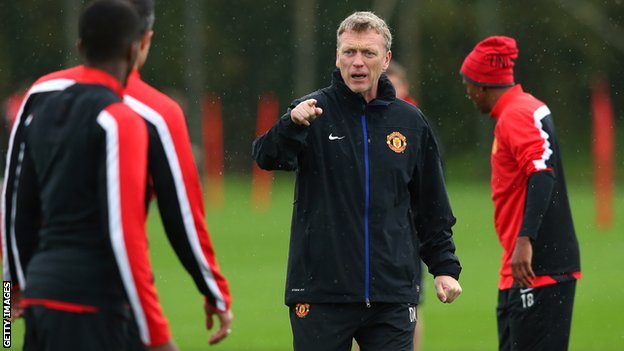
The chosen one
In David Moyes, United appeared to have got their number one target. A fellow Scot, Moyes had won many admirers for his fine work on a tight budget at Everton, and reports at the time declared him Ferguson’s own personal preference to succeed him.
Moyes’ appointment was announced on 9 May 2013 after United had wrapped up yet another league title, but despite success in the Community Shield against Wigan Athletic, the new manager would oversee United’s worst-ever start to a Premier League season.
A 4-1 defeat to rivals Man City was followed by a home reverse against West Brom, and as early as September, the pressure was on the new man in charge. But despite the club’s backing of Moyes, more unwanted records were set, including back-to-back defeats at Old Trafford for the first time since 2002.
Moyes shouldered the responsibility for United’s struggles and was able to lead the Reds to the last eight of the Champions League, where they would be eliminated by Bayern Munich, but their run in Europe did little to placate an increasingly agitated fanbase, whose discontent became louder with each match day.
Then, just ten months after taking the job, United sacked Moyes, bringing to an end the third-shortest managerial spell in the club’s illustrious history. His fate was sealed despite calls from club legends including David Beckham to give the new manager more time.
But in the end, it was United’s failure to qualify for the Champions League, finishing a full 15 points outside of the top four, and 22 behind Champions Manchester City, that would cost Moyes his job. He would be replaced by Louis van Gaal.
Moyes welcomes Sir Alex’s presence at #mufc games: “He’s been incredibly supportive.” More: http://t.co/F9kQpo4UPw pic.twitter.com/E1Kr1Aed7v
— Manchester United (@ManUtd) January 13, 2014
A buzz all too brief
In many respects, van Gaal was the opposite of Moyes. While Moyes was a regarded by many as a young manager taking on his first big job when he arrived at Old Trafford, van Gaal had already led Bayern Munich and Barcelona, around stints on the international stage as manager of Netherlands.
The Dutchman had impressed chief executive Ed Woodward with his positivity that had helped create a buzz around Old Trafford, but that buzz was sadly short-lived as van Gaal oversaw another poor start to the league season and an embarrassing League Cup exit at the hands of Milton Keynes in the second round.
United found themselves ninth after ten rounds of Premier League fixtures, surpassing Moyes’ own struggles during his opening weeks as Red Devils boss, but while his predecessor was unable to steady the ship, van Gaal did succeed in eventually guiding United to a fourth-place finish in his first season in charge.
van Gaal strengthened during the summer too, adding stars like Anthony Martial and Bastian Schweinsteiger as United targeted a return to the title. But a poor start to the season saw the team defy international football betting markets and crash out of the Champions League, with van Gaal offering his resignation to Ed Woodward by the end of the year.
He remained at the helm to see United win the FA Cup five months later, but it wasn’t enough to save his job. van Gaal and his staff were fired by Woodward two days after the win at Wembley.
With United fifth in the table, Champions League was off-grid for another season. And though Jose Mourinho and Ole Gunnar Solskjaer have helped return the Red Devils to respectability, they are still far from title challengers – with the gap between themselves and the top spot in the Premier League seemingly wider than ever.